
Overview

Our Height Safety Equipment Inspector course is designed to equip participants with the practical skills and knowledge required to inspect and identify defects in height safety equipment, in line with the requirements of AS/NZS 1891.4 – Industrial Fall-Arrest Systems and Devices: Selection, Use and Maintenance. The Australian Standard requires that periodic inspections are conducted by a competent person; someone with the training, knowledge, and experience to detect faults and determine appropriate actions.
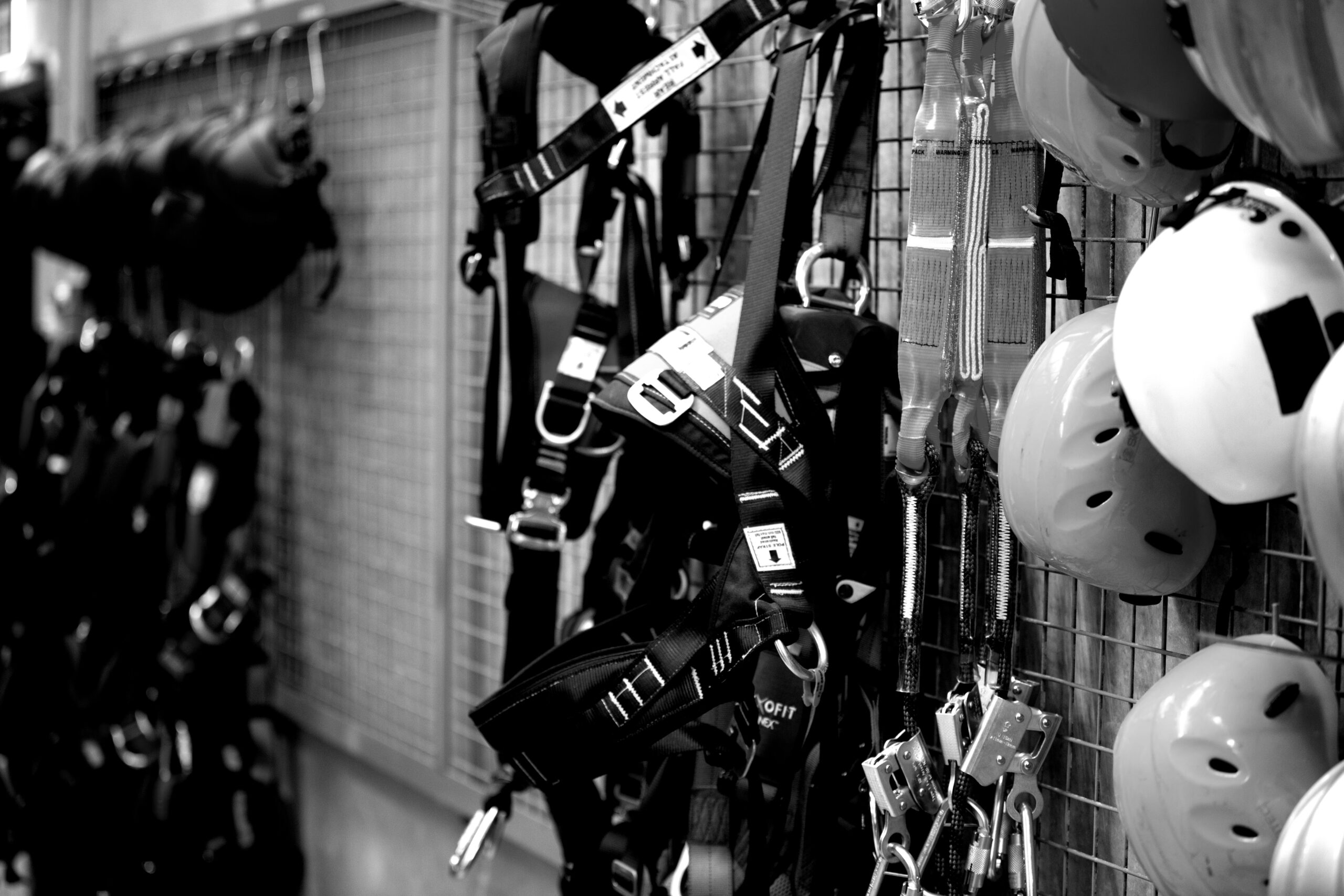
This course provides hands-on practical training in the inspection of a wide range of height safety equipment, including harnesses, lanyards, connectors, fall-arrest devices, ropes, and slings.
While this course provides the training required to inspect height safety equipment, competency is determined through a combination of training, qualification, and industry experience, as defined under Australian Standards. This course is not manufacturer-specific and does not replace product-specific training where required.
This course is ideal for:
- Safety personnel and supervisors
- Emergency response and rescue teams
- Workers responsible for issuing or maintaining height safety equipment
- Anyone involved in working at heights who requires inspection capability
Learning outcomes
The course covers the following:
- Legislative requirements.
- Identify damage, wear, and defects in both textile and hardware components
- Conduct pre-use and formal inspections in accordance with industry standards
- Understand factors that contribute to equipment deterioration
- Apply correct cleaning, storage, and maintenance practices
- Complete compliant documentation, tagging, and inspection records
Entry Requirements
Participants must:
- Provide a Statement of Attainment for RIIWHS204E Work safely at heights or equivalent
- Provide photo I.D on entry
- Unless exempt, provide a verifiable USI number
- Be physically fit and healthy with capacity to perform manual tasks
- Be able to read, write, communicate orally, and understand and interpret complex information and situations
- Interact with others and work under pressure
- Dress appropriately i.e., long sleeve, long pants or overalls, safety boots/closed in shoes, safety glasses
Please ensure you read our Student Handbook for further information on our policies, procedures, terms, and program conditions.
SDS is committed to identifying and supporting the language, literacy, numeracy and digital (LLND) needs of all learners. Where required, SDS may conduct an LLND assessment prior to training to determine whether any additional support or reasonable adjustment is needed.
Participants are encouraged to advise the training team at any time if they believe they may require learning support so appropriate arrangements can be made.
Delivery method
This course is delivered over four (4) hours, and consists of classroom-based theory learning with practical based activities.
Assessments
Assessment includes written and/or multiple-choice knowledge assessment and practical based skills assessments.
Completion
On successful completion of all assessment requirements participants will receive a Nationally Recognised Statement of Attainment for:
- PUAEQU001 Prepare, maintain and test response equipment
Skills maintenance
There is no legislated expiry for this unit, industry best practice recommends refresher training every two (2) years to maintain competence and familiarity with current standards and procedures.